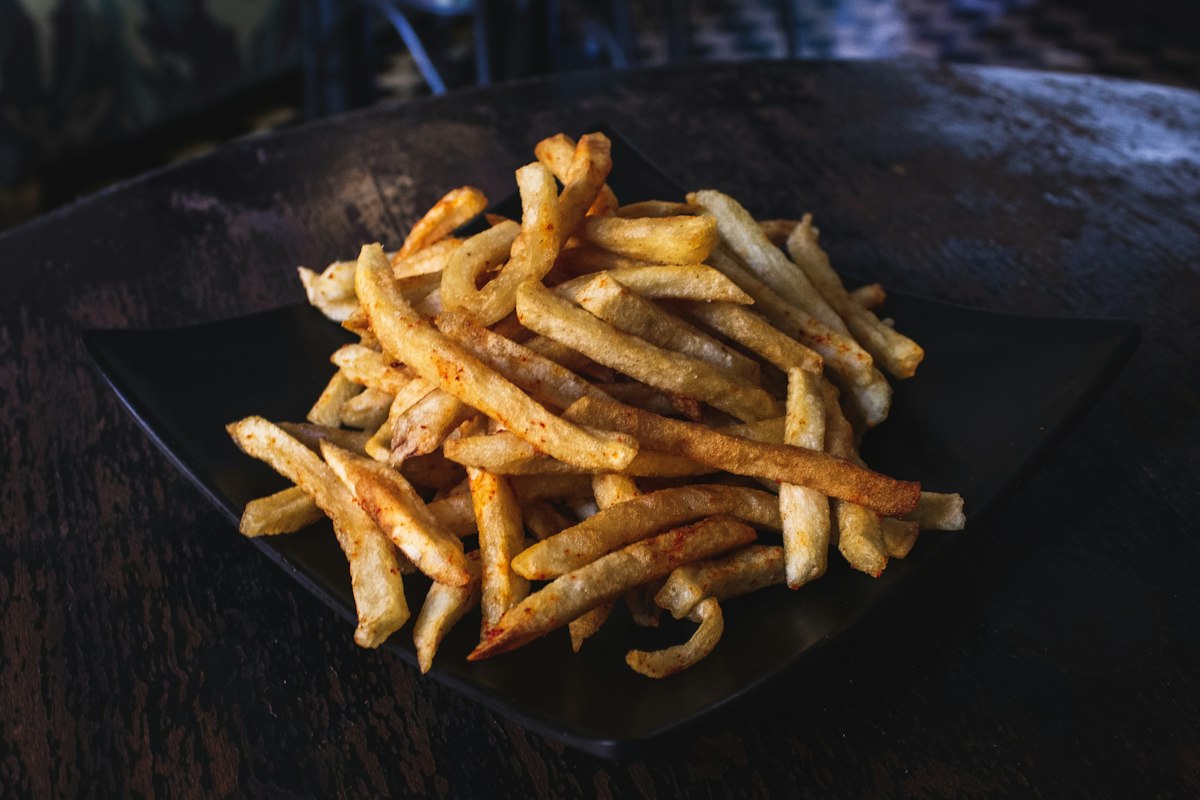
The Fry as a Litmus Test
Here's something I've believed since before I started the truck: the quality of a food operation's fries tells you almost everything you need to know about how that operation is run. Not because fries are the most complex item on any menu, but because they're actually one of the most revealing. Every shortcut an operator takes shows up clearly in the fry. And every shortcut they don't take shows up there too.
If you're planning a Nashville event and evaluating food trucks, the fry is your fastest and most reliable quality signal. You don't need to review every item on the menu, audit their kitchen, or read through dozens of reviews. Eat the fries. They'll tell you what you need to know.
Here's exactly what to look for and what each thing tells you about the operation behind it.
Frozen vs. Hand Cut: The First Tell
You can identify a frozen fry pretty reliably without asking anyone. Frozen fries are uniform. Every piece is the same length, the same width, the same shape. That consistency is actually a dead giveaway, because real potatoes don't produce that result. When you cut a potato by hand, you get variation. Different lengths, slightly different thicknesses, the occasional irregular piece from the edge of the potato. That variation is a sign of a real starting ingredient.
Frozen fries also have a particular texture when you bite them. The interior is denser and slightly gummy, a result of the potato being processed, par-cooked, frozen, and then reheated. A hand cut fry cooked from raw has a fluffy, almost airy interior that frozen can't replicate no matter how it's cooked.
If the fries are uniform and dense, they're frozen. The operator made a choice to prioritize operational convenience over the product. That's their right. But it's also useful information about how they approach decisions across their menu.
Frozen fries aren't just a quality issue on one menu item. They signal that the operator prioritizes cost and convenience over ingredient quality. That philosophy doesn't stop at the fry. It applies to everything else they're serving at your event.
The Oil Question: Greasy Is a Choice
Greasy fries have a specific cause. It's not random. Grease happens when the oil is too cold (the potato absorbs oil instead of sealing against it), when the oil is too old and degraded (it loses its ability to create a proper crust and starts soaking into the food), or when the oil is poor quality to begin with (cheap commodity seed oils have lower smoke points and absorb into food more readily than quality alternatives like beef tallow).
All three of those causes are within the operator's control. Cold oil means poor temperature management. Old oil means the operator isn't changing their oil frequently enough, which is a cost-cutting decision. Poor-quality oil means the operator chose the cheapest option rather than the best one.
A fry that's genuinely not greasy, that has a dry-feeling crust despite having just come out of a fryer, is a fry cooked in quality oil at the right temperature, managed properly. That takes attention and investment. An operator who makes that choice for their fries is making similar choices across their operation.
Color and Texture: The Execution Indicators
Look at the color. A properly cooked fry is golden, somewhere in the range of amber to light brown. Pale means undercooked or oil that's too cold. Dark brown or spotted means overcooked or oil that's been used too long without changing. Either extreme is a flag.
The texture test is the crunch. Pick up a fry and bite into it before it's had time to sit. You should hear it. That audible crunch is moisture being driven off the surface at the right temperature in the right oil. If the fry is soft or pliable immediately after being handed to you, something went wrong: wrong oil, wrong temperature, or the fry has been sitting under a heat lamp and has already lost its crust.
Soft fries right out of the fryer window almost always mean the truck is batching and holding rather than cooking to order. That's a service system choice. It means the operator optimized for throughput speed rather than product quality. Again, that philosophy doesn't just apply to fries.
Seasoning as a Window Into Craft
How a fry is seasoned tells you whether the operator thinks about their food or just executes a template. There are two common failure modes here.
The first is under-seasoning. Pale, bland fries that taste like starchy nothing. This is an operator who treats seasoning as an afterthought or who seasons in the wrong amounts or at the wrong time (seasoning a cold fry or a fry that's been sitting doesn't work the same way as seasoning hot out of the oil). It suggests the operator hasn't spent time actually tasting and refining their product.
The second is over-seasoning, usually with generic seasoning salt dumped on to cover up a weak underlying product. Heavy, one-dimensional seasoning that coats the outside but doesn't integrate. It's a cover-up. The fry underneath isn't worth eating on its own, so the operator is trying to distract from that with sodium.
A well-seasoned fry has balance. The salt enhances without dominating. There's complexity in the seasoning blend that works with the flavor of the potato and oil rather than covering it. That balance comes from someone who actually tasted the fry many times, adjusted, and landed on something intentional. That's a quality-focused operator.
| What You Observe | What It Signals |
|---|---|
| Uniform, identical fry shapes | Frozen product, not hand cut |
| Greasy, oil-soaked exterior | Cold oil, old oil, or cheap oil |
| Soft immediately after service | Batched and held, not made to order |
| Pale color, dense interior | Underfrying or frozen base product |
| Bland, unseasoned flavor | No attention to finishing or craft |
| Crispy, golden, fluffy inside, well seasoned | Operator who does the actual work |
Why Fry Quality Transfers to the Whole Menu
The connection between fry quality and overall quality isn't a theory. It's a practical observation about how kitchens run. The habits and standards an operator applies to their simplest, most common item are the habits and standards they bring to everything. A cook who pays attention to oil temperature for fries pays attention to cooking temperatures across the board. An operator who invests in quality tallow for frying invests in quality ingredients throughout the menu. A truck that makes fries to order runs a tight, attentive service line on everything.
The reverse is equally true. A truck that is willing to use frozen fries, old oil, and generic seasoning on their most prominent item is comfortable with those shortcuts everywhere. The chicken, the proteins, the sauces, the sides: all of it is being made by people operating at the same standard they apply to the fry.
At a Nashville event, whether it's a corporate lunch off Charlotte Pike, a wedding reception in The Nations, or a big company party at a downtown venue, your guests are going to eat the food and form an opinion about your event based on it. The fry is the fastest way to know in advance which kind of truck you're dealing with. Use it.
What It Actually Feels Like to Eat a Great Event Fry
When everything is done right, the fry experience at an event is genuinely different from what most people expect from a food truck. The crunch is real and immediate. The interior is soft and steamy, not gummy. The flavor is complex: a savory depth from the tallow, the right amount of salt landing on the crust, the natural sweetness of a potato that was cut fresh and cooked properly. You eat one and immediately want another one.
That reaction, the "okay I need more of these" moment, is what you want your guests having at your event. It's what makes people talk about the food afterward. It's what makes your event memorable rather than just fine. And it starts with the fry.
When you're evaluating trucks for your next Nashville event, eat the fries first. Everything you need to know is in that first bite.